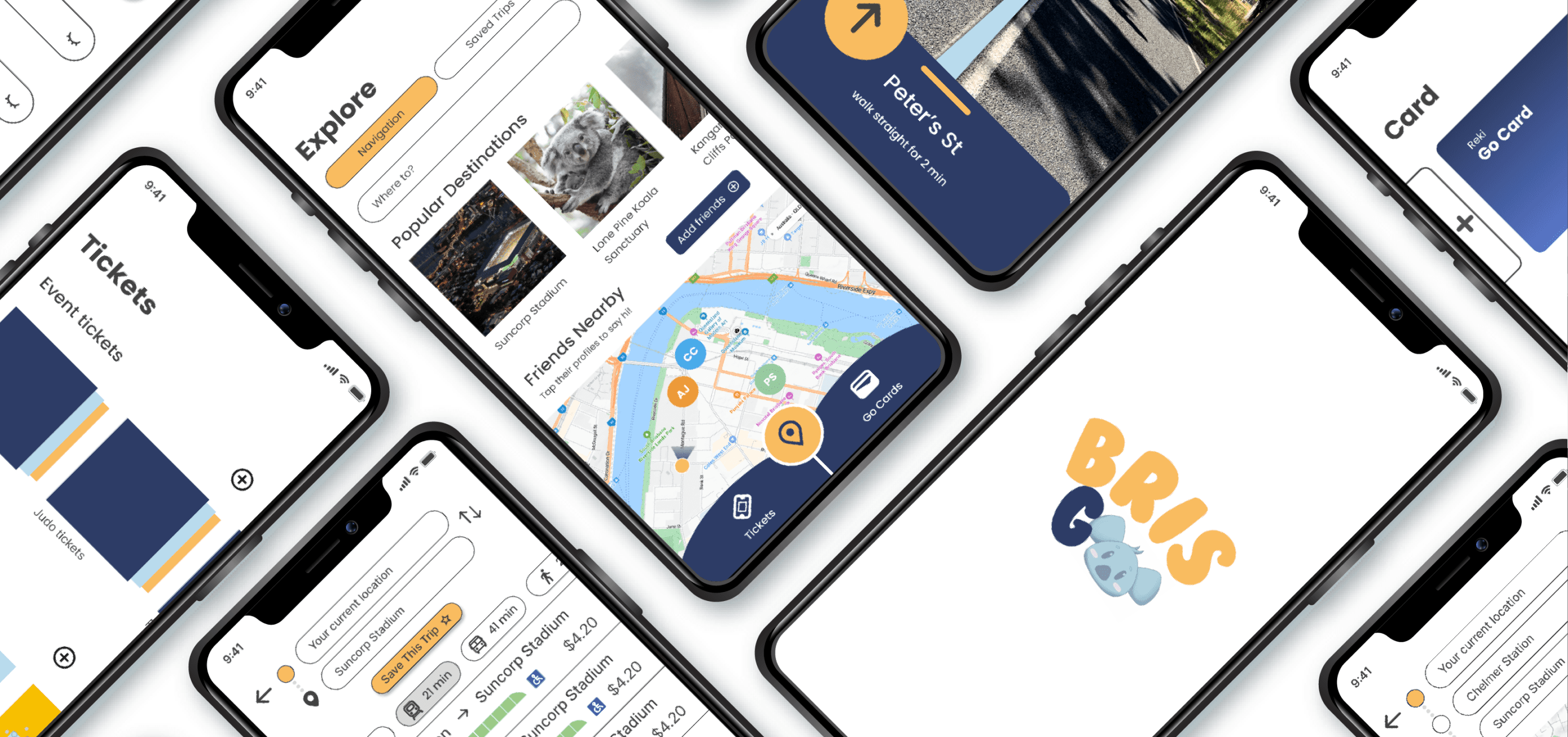
BrisGo

Empowers users to navigate Brisbane with ease during the 2032 Olympics, offering real-time transport updates, personalised routes, and multi-modal options, ensuring a smoother, more efficient travel experience throughout the Games.

Overview

For the DECO2200 Interaction Design Studio, our team of three UX/UI designers worked collaboratively on a transportation app for the Brisbane 2032 Olympics. I contributed to research, user testing, wireframing, and prototyping, focusing on seamless navigation, real-time updates, and multi-modal transport options to enhance the travel experience for visitors during the Games.

Role

UX/UI Designer, User Researcher

Team members

Kim Ngoc (Mari) + 2 members

Duration

Sep-Nov 2024, 9 weeks

Tools

The problem 📌

The problem 📌

Public transportation systems face difficulties in managing increased demand, navigational difficulties, infrastructure strain, and accessibility issues, especially during large-scale events like the Olympics. It emphasises the need for better planning, intelligent systems, and user-centric solutions.

Public transportation systems face difficulties in managing increased demand, navigational difficulties, infrastructure strain, and accessibility issues, especially during large-scale events like the Olympics. It emphasises the need for better planning, intelligent systems, and user-centric solutions.

Discover 🔭

Discover 🔭

Secondary research

Crucial Role of Public Transportation

Effective public transportation is crucial for managing the influx of international visitors during the Olympics.

Athens and Beijing's Success

Athens and Beijing successfully addressed transport challenges by upgrading infrastructure and implementing intelligent systems to ensure smooth travel.

(Baş & Delaplace, 2023; Frantzeskakis & Frantzeskakis, 2006; Wang et al., 2003).

Paris's Reliance on Existing Systems

Paris, in contrast, relies heavily on its subway and commuter rail systems, highlighting the need for efficient public transport to accommodate visitors without overwhelming existing infrastructure.

(Grabar, 2024)

Opportunity 🔑

Opportunity 🔑

As Brisbane prepares for the 2032 Olympics, there is a growing need for efficient travel solutions to handle the influx of visitors. Existing apps lack real-time updates and multi-modal options for large events. BrisGo offers an opportunity to address this gap, providing seamless navigation and improved travel experiences during the Games. The main challenges are:

As Brisbane prepares for the 2032 Olympics, there is a growing need for efficient travel solutions to handle the influx of visitors. Existing apps lack real-time updates and multi-modal options for large events. BrisGo offers an opportunity to address this gap, providing seamless navigation and improved travel experiences during the Games. The main challenges are:

Ensuring Real-Time Accuracy

Providing accurate, real-time transport updates during the high-demand period of the Olympics to prevent delays and confusion.

Seamless Integration Across Transport Modes

Developing a system that efficiently integrates multiple transport modes (bus, train, ferry, etc.) to offer smooth, coordinated routes for users.
Discover

Discover

Define

Define

Develop

Develop

Deliver

Deliver

Desktop Research

Desktop Research

Surveys & Interviews

Surveys & Interviews

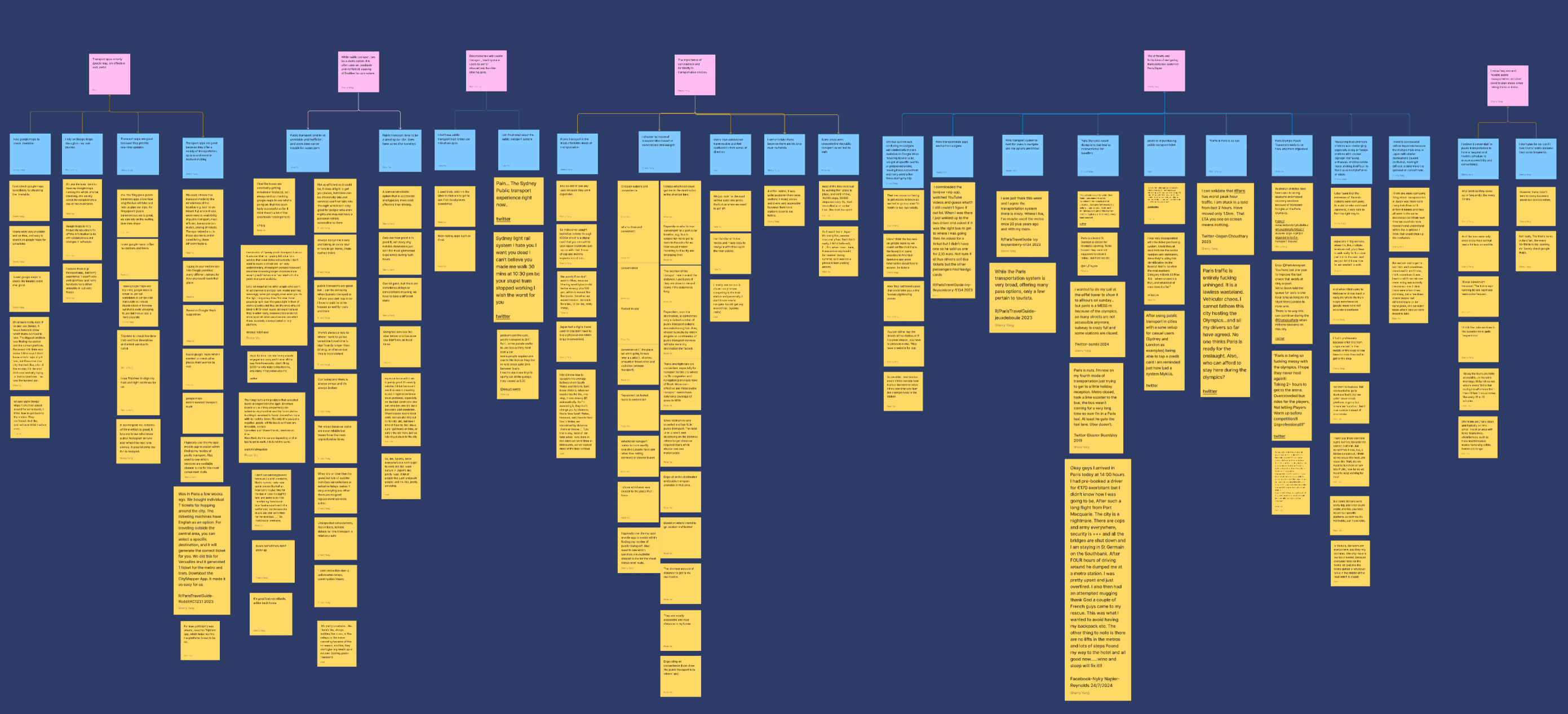
Affinity Diagram

Affinity Diagram

Insights

Insights

User personas & jouneys

User personas & jouneys

Problem Statement

Problem Statement

Ideation

Ideation

Iterative design

Iterative design

User testing

User testing

Refine

Refine

Define style guide

Define style guide

Prototyping

Prototyping

How might we💭

How might we💭

How might we design a seamless, user-friendly transport app that effectively assists Olympic visitors and Brisbane residents in navigating the city, staying informed in real-time, and confidently utilising multi-modal transport options during the Brisbane 2032 Olympics?

How might we design a seamless, user-friendly transport app that effectively assists Olympic visitors and Brisbane residents in navigating the city, staying informed in real-time, and confidently utilising multi-modal transport options during the Brisbane 2032 Olympics?

Defining the MVP🥇

Defining the MVP🥇

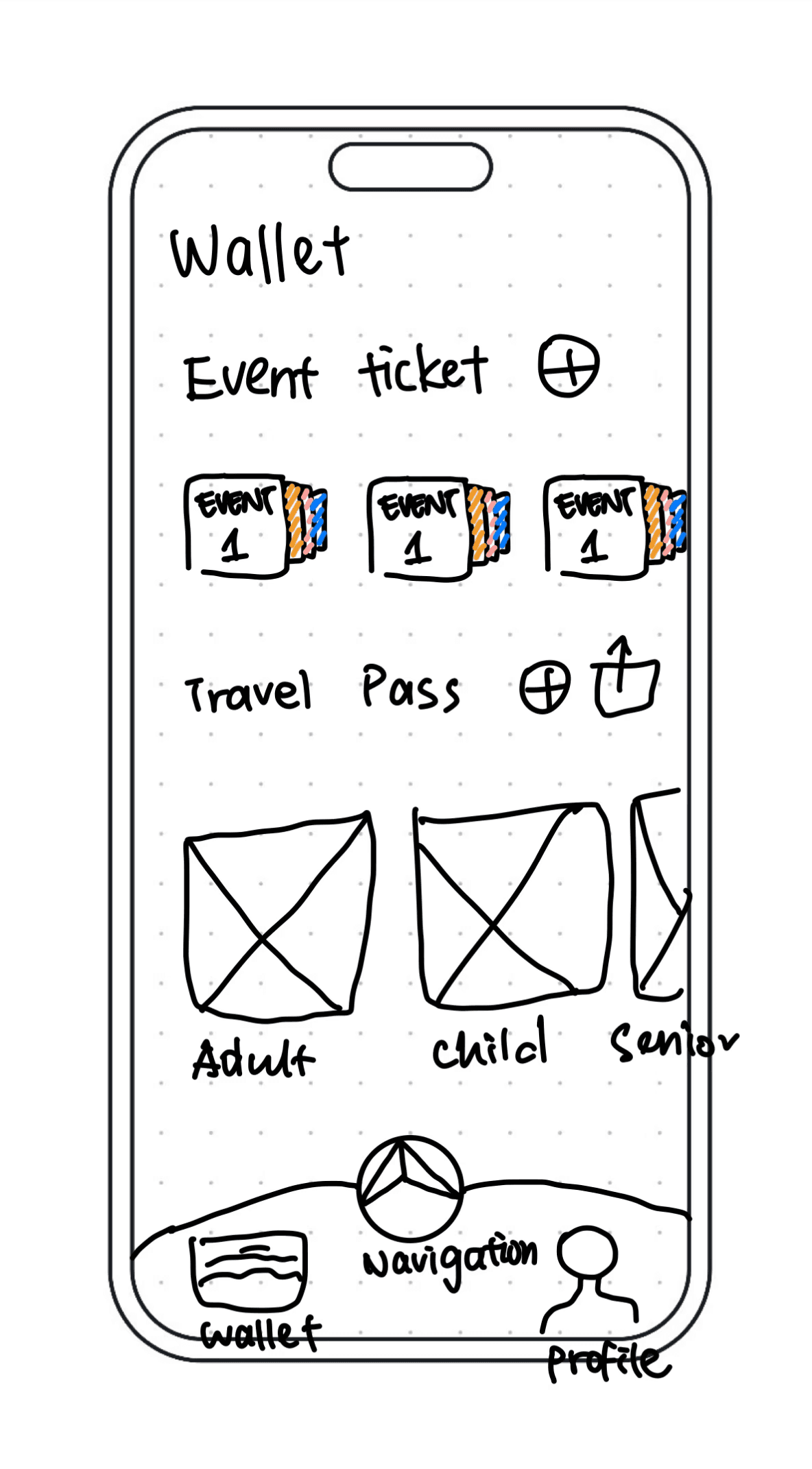
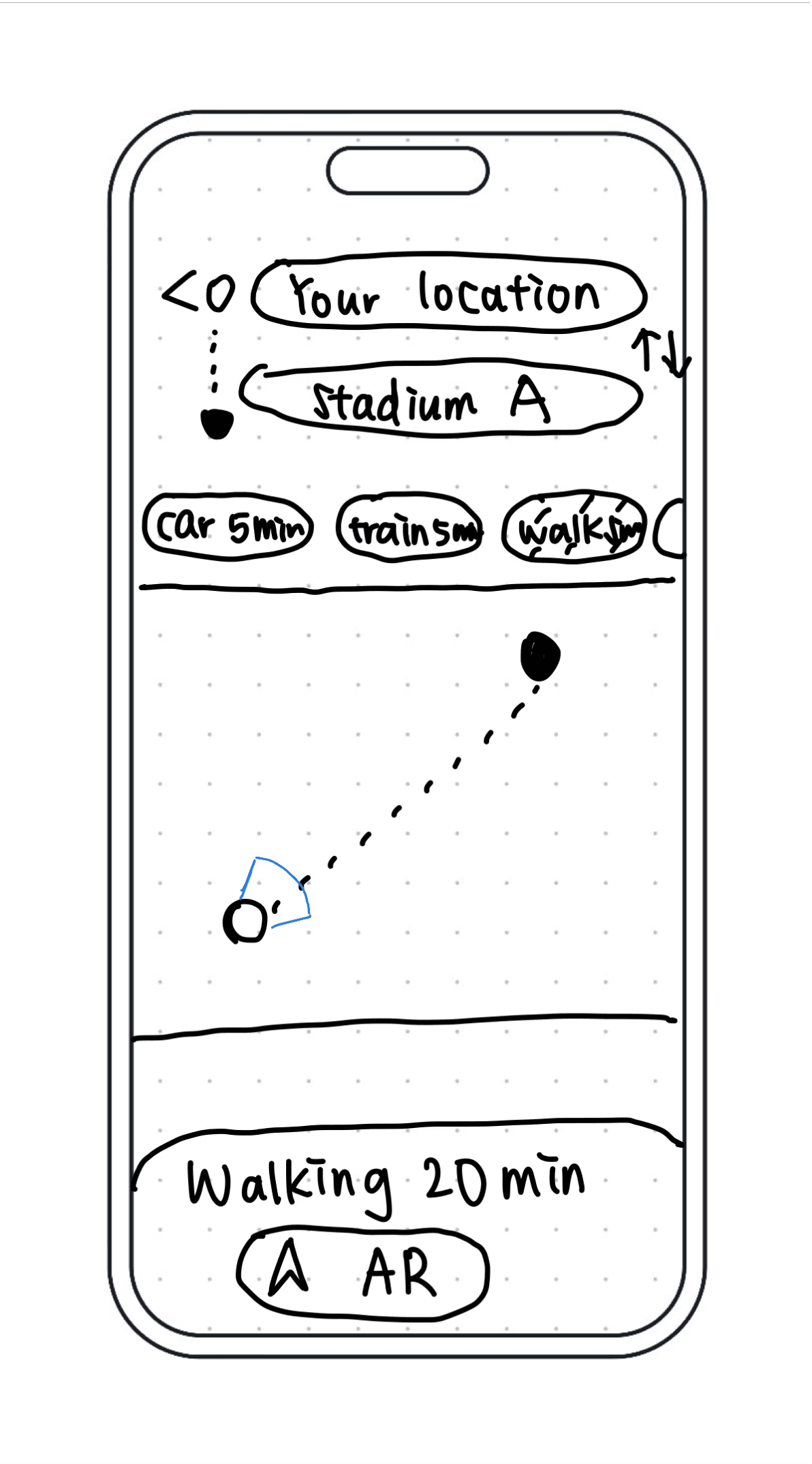
As a group, we use the Crazy 8s technique to quickly generate a wide range of ideas, sketching out anything we think could be useful for the app. Some of us came up with similar concepts, while others explored different directions. After discussing and evaluating the ideas, we initially narrowed our focus down to two MVP features:

As a group, we use the Crazy 8s technique to quickly generate a wide range of ideas, sketching out anything we think could be useful for the app. Some of us came up with similar concepts, while others explored different directions. After discussing and evaluating the ideas, we initially narrowed our focus down to two MVP features:

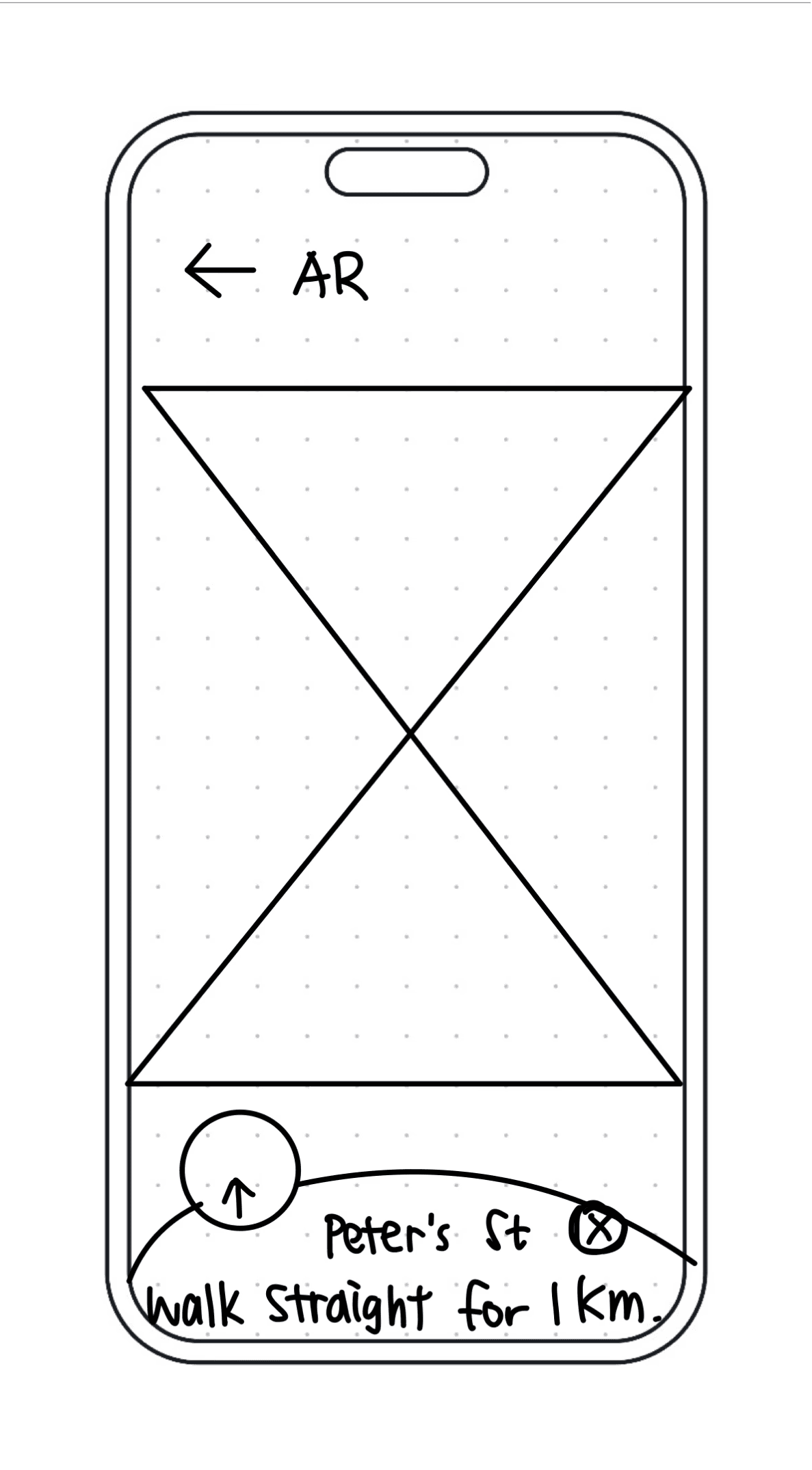
  1. AR map navigation: Users can utilise the AR map feature to easily navigate to their location by following the path displayed on the AR screen.

  2. Ticket holder: Users can purchase their Olympics tickets through the app and store them there. They can share tickets with other holders, and when needed, one phone can be used to scan the tickets simultaneously, simplifying the experience for users. 

  1. AR map navigation: Users can utilise the AR map feature to easily navigate to their location by following the path displayed on the AR screen.

  2. Ticket holder: Users can purchase their Olympics tickets through the app and store them there. They can share tickets with other holders, and when needed, one phone can be used to scan the tickets simultaneously, simplifying the experience for users. 

Mid-fidelity🔨

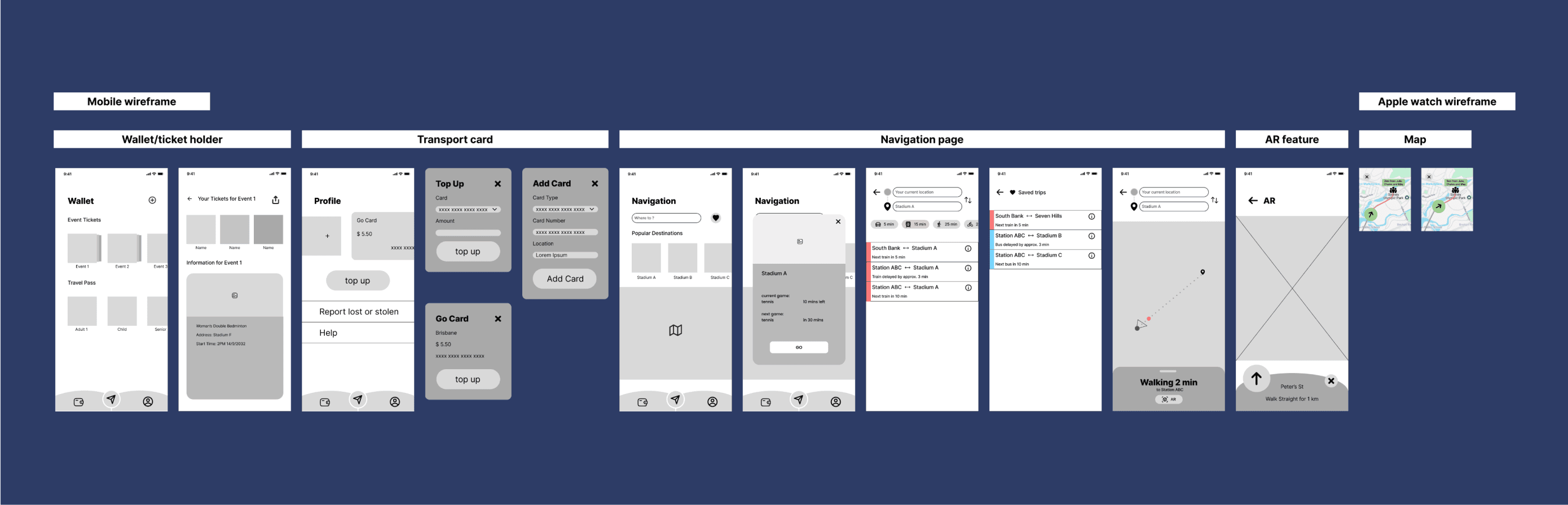
We created mid-fidelity prototypes in the form of digital wireframes on Figma. As we had various features to our solution, we used information architecture mapping to better visualise and understand how our prototype should flow. Additionally, we conducted user testing on these prototypes and iteratively refined our designs based on feedback to enhance usability and ensure a seamless user experience.

User Persona👨‍💼

User Persona👨‍💼

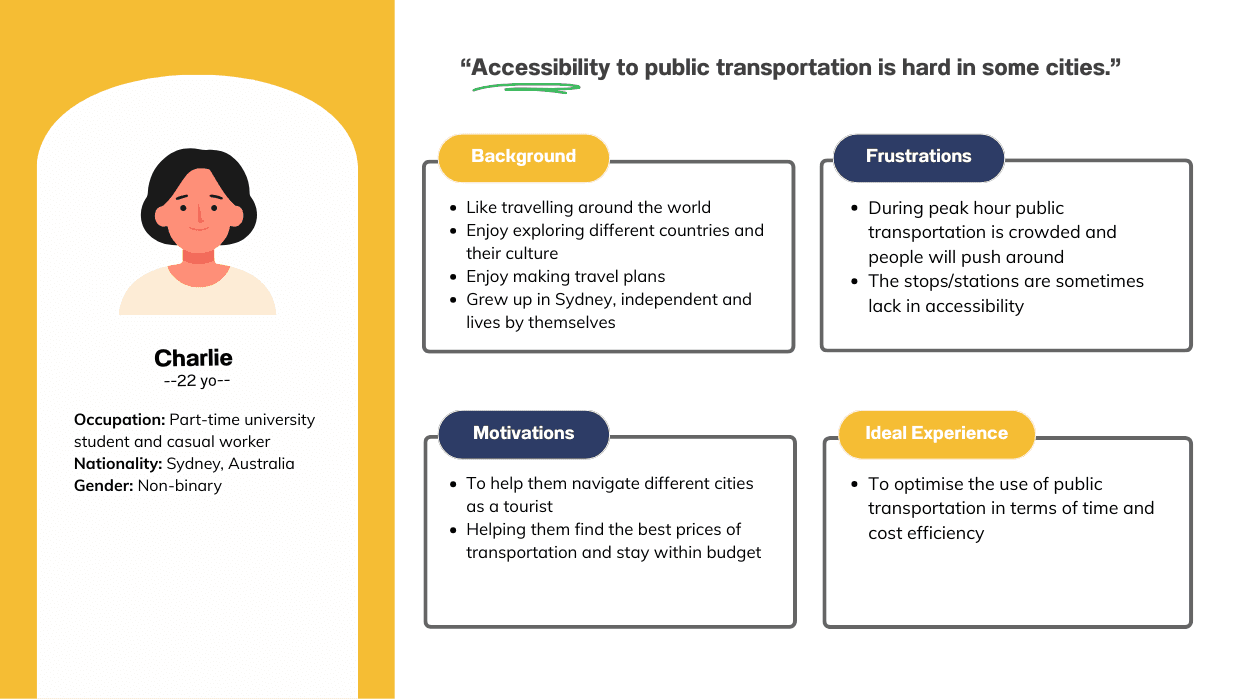
After diving deep into our research, we created a user persona that brings the story of asthma management to life. This persona highlights the real challenges and needs of individuals like Bob, who struggle to balance their health with an active lifestyle. It shows their desire for simple and effective tools that not only help manage their condition but also allow them to stay active and engaged in the activities they love.

After diving deep into our research, we created a user persona that brings the story of asthma management to life. This persona highlights the real challenges and needs of individuals like Bob, who struggle to balance their health with an active lifestyle. It shows their desire for simple and effective tools that not only help manage their condition but also allow them to stay active and engaged in the activities they love.

Usability testing📊

Usability testing📊

For usability testing, we use the think-aloud protocol to observe how users naturally interact with the app while completing key tasks, providing valuable insights into their behaviours and thought processes. After each session, we conducted post-interviews and administered the System Usability Scale (SUS) to collect users' reflections on the overall concept and functionality. To further analyse the feedback, we used affinity diagramming to group common themes and pain points, allowing us to clearly identify areas for improvement and refine our design accordingly.

For usability testing, we use the think-aloud protocol to observe how users naturally interact with the app while completing key tasks, providing valuable insights into their behaviours and thought processes. After each session, we conducted post-interviews and administered the System Usability Scale (SUS) to collect users' reflections on the overall concept and functionality. To further analyse the feedback, we used affinity diagramming to group common themes and pain points, allowing us to clearly identify areas for improvement and refine our design accordingly.

Key findings/feedback

Early Usability Issues

Initial testing revealed issues with unclear naming, hard-to-notice icons, and confusing navigation steps.

Improvements Through Iteration

Refinements focused on enhancing error prevention , sign-in prioritisation , and design consistency , addressing pain points identified in earlier rounds.

Final Validation and Minor Tweaks

Final testing confirms the effectiveness of these changes, with minor adjustments made to improve account button visibility and ticket interaction flow.

UI Design Style Guide👨‍🎨

UI Design Style Guide👨‍🎨

Before creating the high-fidelity prototype, we established a comprehensive style guide inspired by Material Design principles. Our goal was to craft a clean and intuitive visual design that ensured ease of use, focusing on readability and comfort for users navigating the app in transit environments.

Before creating the high-fidelity prototype, we established a comprehensive style guide inspired by Material Design principles. Our goal was to craft a clean and intuitive visual design that ensured ease of use, focusing on readability and comfort for users navigating the app in transit environments.

Typography | Poppins

Aa

Aa

Aa

Primary/Main

2D3C66

Secondary/Main

Secondary/

Main

F9BC60

Accent/Main

B9DBED

Body/Default

424242

Background/Default

Background/

Default

FAFAFA

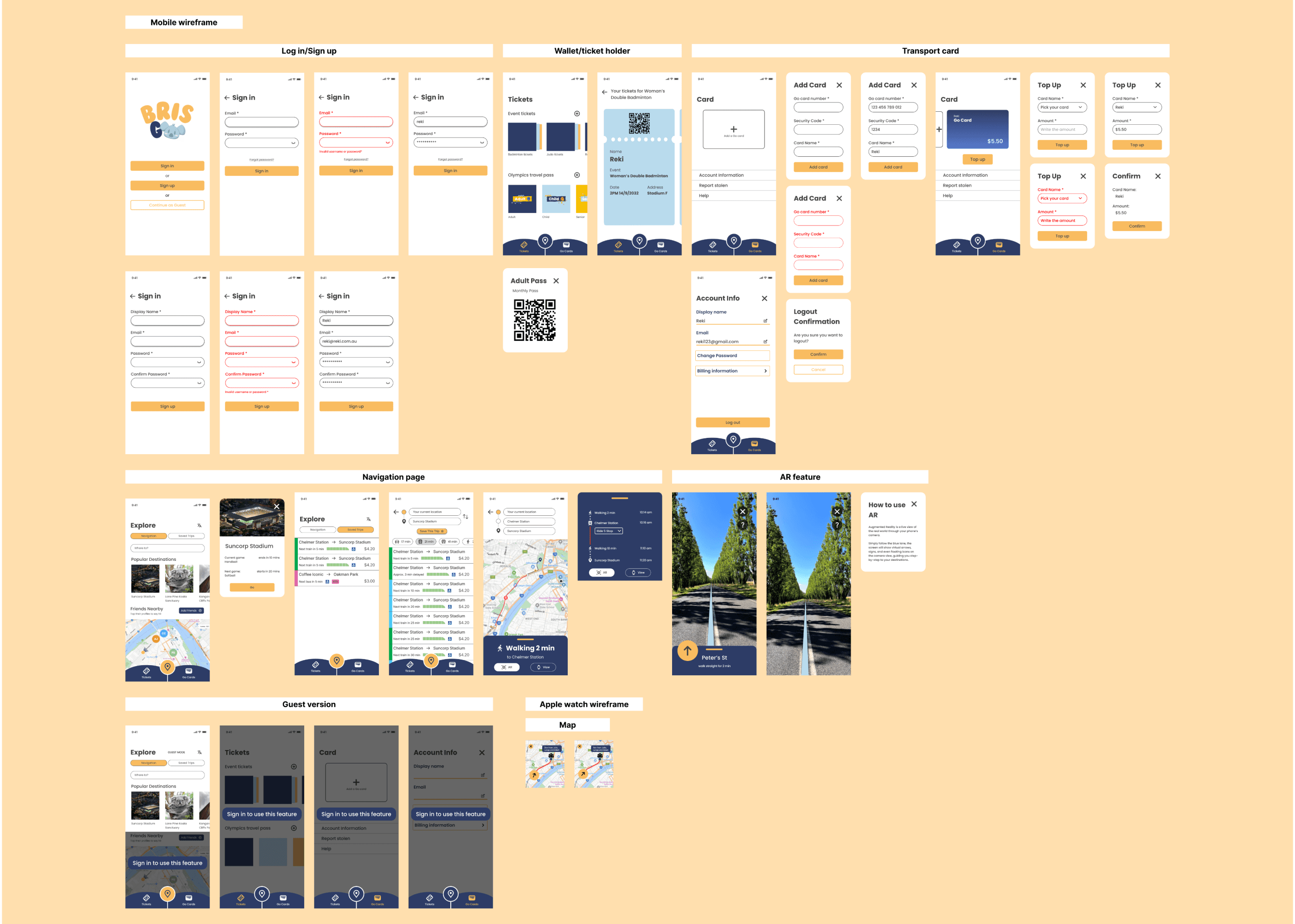
Final design🎉

Final design🎉

Reflections & Takeaways🔐

Reflections & Takeaways🔐

I learned to iterate with purpose, focusing on changes that truly improved the user experience rather than reacting to all feedback. Our team worked well together, combining our strengths through collaborative ideation and structured research. A major strength was gathering global insights through online ethnography, supported by research triangulation. Limitations included a narrow participant pool, mostly from Melbourne and Sydney, and limited ideation methods. More usability testing and creative techniques like Crazy 8s could have strengthened the final outcome.

I learned to iterate with purpose, focusing on changes that truly improved the user experience rather than reacting to all feedback. Our team worked well together, combining our strengths through collaborative ideation and structured research. A major strength was gathering global insights through online ethnography, supported by research triangulation. Limitations included a narrow participant pool, mostly from Melbourne and Sydney, and limited ideation methods. More usability testing and creative techniques like Crazy 8s could have strengthened the final outcome.

Solution 💡

Solution 💡

BrisGo is a smart travel app designed for the Brisbane 2032 Olympics, providing real-time transport updates, personalized routes, and seamless multi-modal navigation, ensuring users can travel efficiently and stress-free throughout the city during the Games.

BrisGo is a smart travel app designed for the Brisbane 2032 Olympics, providing real-time transport updates, personalized routes, and seamless multi-modal navigation, ensuring users can travel efficiently and stress-free throughout the city during the Games.

Understanding the problem 🔎

Understanding the problem 🔎

BrisGo

Empowers users to navigate Brisbane with ease during the 2032 Olympics, offering real-time transport updates, personalised routes, and multi-modal options, ensuring a smoother, more efficient travel experience throughout the Games.

Mid-fidelity🔨

We created mid-fidelity prototypes in the form of digital wireframes on Figma. As we had various features to our solution, we used information architecture mapping to better visualise and understand how our prototype should flow. Additionally, we conducted user testing on these prototypes and iteratively refined our designs based on feedback to enhance usability and ensure a seamless user experience.

Create a free website with Framer, the website builder loved by startups, designers and agencies.